
BMW Group India says every Re 1 depreciation in the rupee against the euro trims its profit margin by about 1 per cent, prompting the company to consider further price increases.

India's electric two-wheeler (e2W) market is consolidating, with established manufacturers TVS Motor, Bajaj Auto, and Hero MotoCorp, alongside EV specialist Ather Energy, driving nearly 96% of incremental registrations in the first half of 2026, while former market leader Ola Electric experienced a significant decline in registrations.

Nissan Motor India aims to achieve a fourfold increase in domestic sales, targeting 100,000 units annually, and export another 100,000 vehicles from its Chennai plant by financial year 2027-28 (FY28), marking a significant revival of its presence in the Indian passenger vehicle market.

Tata Motors expands its market leadership in India's electric passenger vehicle (ePV) segment, capturing 39 per cent of the market in Q1FY27, while simultaneously strengthening its position as the nation's second-largest carmaker amidst fierce competition and rapid market growth.

Tata Motors is set to acquire Italy's Iveco Group, a strategic move aimed at propelling the Indian automaker into the top four global commercial vehicle (CV) manufacturers, with projected annual revenues of $35 billion-$40 billion within five years.

The Delhi government has approved the Delhi EV Policy 2.0, which will phase out fresh registrations of internal combustion engine (ICE) two-wheelers and three-wheelers over the next two years, starting with a ban on ICE 3Ws and N1 category LCVs from January 1, 2027, and ICE 2Ws from April 1, 2028.

Companies are investing heavily in complex injectables, respiratory therapies and biosimilars to improve margins and diversify portfolios.

Tata Motors' commercial vehicle (CV) business is strategically repositioning itself from a traditional truck manufacturer to a comprehensive logistics and mobility platform, aiming to reduce dependence on cyclical vehicle demand by accelerating growth in digital, international, and services segments.

The launch highlights the growing maturity of India's nuclear medicine ecosystem.

Mercedes-Benz India is exploring a larger role for plug-in hybrid electric vehicles (PHEVs) in its portfolio, with plans to potentially introduce the technology in more models beyond the newly launched S-Class plug-in hybrid. This strategy aims to cater to luxury car buyers who are hesitant about fully electric vehicles due to concerns over charging infrastructure and range.

Health experts warn that rising temperatures could create a growing burden of silent and cumulative health stress across the population.

Mahindra & Mahindra (M&M) is expanding its farm equipment strategy beyond tractors to include a wider range of mechanisation solutions like harvesters, balers, seed drills, and telematics-enabled services, aiming to capitalise on the growing demand for rental services by rural entrepreneurs and address low mechanisation levels in Indian agriculture.

The luxury carmaker plans to drive growth through local assembly of the MINI Countryman, expansion into 10 new cities and a broader product portfolio.

Companies are already diversifying sourcing, raising prices, and reworking operating models as the disruption drags on.

Tata Motors' commercial vehicle business is increasingly focusing on parts, services, connected-vehicle platforms, and digital businesses to drive growth and reduce dependence on cyclical vehicle sales, as outlined in its FY26 annual report.

Indian pharmaceutical companies are strategically increasing investments in the US market, focusing on specialty drugs, complex generics, respiratory products, and local manufacturing, despite a nearly 10 per cent fall in exports to the US in FY26 due to pricing pressure and competition in traditional generics.

While SUVs have steadily gained share across the industry, data shows that nearly three in 10 luxury vehicles sold in India are sedans, highlighting the segment's resilience despite years of SUV-led growth.

Maruti Suzuki India reported a significant 147 per cent year-on-year increase in mini-car sales (Alto and S-Presso) during April-May 2026, reaching 32,341 units, driven by eased production constraints and a surge in demand for CNG vehicles amidst rising fuel prices.

Sun Pharmaceutical Industries reported strong consolidated numbers for Q4 FY26, with net profit rising 26 per cent year-on-year to 2,714 crore, despite continued weakness in its US generics business. Growth in innovative medicines and increased R&D investments are helping to offset these pressures.
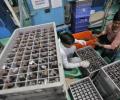
Escalating geopolitical tensions in West Asia are beginning to disrupt India's automotive supply chain, leading to rising commodity prices, logistics bottlenecks, material shortages, and pressure on consumer demand, with two-wheeler makers already raising prices.
